
The Future of Democracy Depends on the Republican Party
The Battle for a Liberal Society is Happening Within the Political Right

Right now, the Republican Party is enabling the authoritarian leader who is ignoring the law and terrorizing his own citizens. Because of this party’s leader, we no longer live in a full democracy. But, despite this or, perhaps, because of it, the future of democracy in the United States will depend on choices made within the Republican Party.
This must be the path because a liberal democracy requires more than one functioning party, and, at least in the foreseeable future, the Republican Party will be one of them. Our plan for sustaining that liberal society can’t be shutting the GOP out of power, but rather must include shaping the Republican Party, the party that will represent the approximately half of society that inevitably holds right-wing beliefs, into a party that upholds liberalism (small l) and democracy.
The alternative is to hope that Democrats win all elections moving forward. But if this is our plan for sustaining democracy, we are cooked. First, it will not happen: voters will eventually turn away from the incumbent party, no matter how bad the alternative. You don’t need a long memory to see this. After 2020, the Republican Party seemed dead—their leader disgraced, defeated at the polls, holding onto a dying vision of America—but it was back four years later. Even more dramatically, after the Civil War, in which Americans in Northern states had, essentially, gone to war against the Democratic Party, a majority of voters in many of those states voted for the Democratic Party again within 10 years. And, within a generation, the Democrats were back in power. Republicans right now are rejected by a majority of voters, but the incredible thermostatic nature of public opinion means that won’t last forever. And second, one party winning all the time isn’t really a functioning democracy. Any conditions that ensure one party wins all the time will also ensure that the party will not be responsive and accountable to voters.
The Republican Party is going to remain, and it’s going to remain conservative. If you’re a liberal, you’re not going to like that. But not having a competitive conservative party isn’t realistic (and maybe not healthy for democracy). The question is not whether the Republican Party remains electorally viable, because it will. Politics is simply too calcified for Republican voters to move beyond the Republican Party in the foreseeable future. The real question is whether the Republican Party will remain a partner for liberal democracy. This is the struggle currently happening within conservative ranks in this country, and the one democrats (small d) must be concerned about.1
Let me make the case by way of anecdote.
A small matter in the grand scheme of the current assault on democracy and decency in the United States, but there was a story in the Harvard Crimson before the holidays last year recounting how students writing for a conservative campus publication, the Harvard Salient, had, among other awful content, attempted to publish articles with Nazi propaganda and a defense of the Spanish Inquisition. Some of this material was actually published. Shortly thereafter, the publication’s board of directors, acting as the “adults in the room,” intervened, suspended publication, and removed the publication’s student leadership. Good for them. I suspect that I don’t agree with the Salient board members on many issues, but I applaud their standing up for the basic principles of liberalism that define a decent society.
The fact that students at Harvard had thought it okay to put such things in print shows just how far norms have eroded on the political right in this country. Once upon a time, the idea that anybody—left, right, or center—would quote Hitler, even in passing, would have been enough to get them in trouble. So, people, appropriately, self-censored. This is the way norms work. But, in this case, these students didn’t just quote Hitler in passing—they sat at their computer, wrote down these words, sent them up the editorial chain, had other people look at them, and still put some of them in print for other people to see. Apparently, they didn’t anticipate that others would see a problem with what they were doing.
Unfortunately, though, the Salient incident is not an outlier. News reports during the second Trump administration have been full of stories of Republicans flirting with fascism.
But notice that many such stories also include pushback from fellow Republicans, such as when Young Republican groups, in several states, were shut down after the surfacing of their antisemitic and racist group chats. And the recent Turning Point USA conference, which one would think would be inclined toward unity after the killing of Charlie Kirk, was dominated by infighting over how much xenophobia and antisemitism is acceptable.
Social norms are shaped by such within-group fights. People take cues on what is acceptable to say by whether they are condemned for saying it. Vicente Valentim has a fantastic book showing how social acceptance of radical behavior can be characterized by a model of supply and demand: He traces the growth of support for radical right (e.g., neo-Nazi) parties in Europe, whereby people privately supported these parties but were afraid to do so publicly because doing so was socially unacceptable. But, over time, these people have been encouraged in their support by opportunistic politicians, and so they have gone public with their beliefs. The supply of radical-right views has always been there, but the shift in demand among politicians has made them acceptable.
Now, we are already far down a dangerous road in the United States where the supply and demand for open xenophobia and bigotry are converging. Prominent officials in the Trump regime act like fascists. Trump himself embraces gutter racism. Whether the erosion of the norms of liberalism started because of Trump or Trump is merely riding a wave, there is no doubt that the most famous person in America being a racist makes other people think it is acceptable. I have heard people say that blatant bigotry is “escaping containment” among certain cliques—I think this is right.
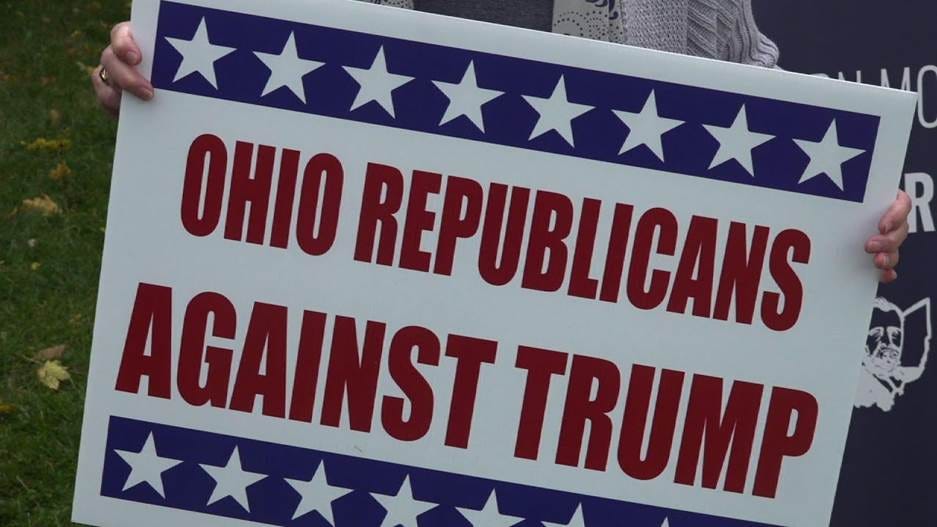
But here’s the important thing. The battle over decency and the support for a liberal society isn’t over, even on the political right. As evidenced by the Harvard Salient, people still intervene and push back against the forces of illiberalism. The battles in places like the Salient, the Young Republicans, and even Turning Point USA are battles over what is socially acceptable—about whether the supply and demand for such illiberalism is allowed to grow.
There are conservatives in this country who have a long enough view of history to understand the danger in the demonization of minority groups. Of course, there are elements of conservatism that rest on maintaining group-based hierarchies; some may even say such maintenance is central to conservative worldviews. But this creates a tension in American conservatism because an element of nationalism, also prominent among conservatives, sees America’s proudest moment as the defeat of fascism and its illiberal, racist ideology. The reverence of the founding principles of equality in the United States and the birth of the Republican Party as America’s liberal party, committed to the end of slavery, further creates tensions for the fascist-friendly conservatives.
Right now, the Republican Party has both elements: those who reject racist ideology and those who embrace it. It’s an unstable coalition—they can’t exist together forever, and we have to hope that the side that is uncomfortable with fascism wins.
So, what does this mean for democracy? Small-l liberalism is one side of the coin of liberal democracy, and a similar battle over the normalization of anti-democratic forces is happening in the wake of Trump’s assault on the rule of law. Yes, the elements of the Republican coalition that are willing to throw the rule of law overboard in subservience to Trump are winning, but the other side still exists. People have their limits, for some it is the Epstein files, for others it is the unconstitutional use of military force. All of these things expose cracks in the Republican coalition.
The upshot of all this is that political liberals have to do what we can to ensure that those who believe in democracy and liberalism win this internal battle. Liberals need to find common cause with those fighting for the norms of liberal democracy, even if we disagree with them on policy.
The looming collapse of Trump’s support, already seen in polls or Republicans in Congress heading for the exits, gives democracy a chance—but people who want to jump off the Trump train for instrumental reasons have to be convinced that there is a comfortable place for them to land. If the water is full of sharks, why not just go down with the ship? In practice, this means we have to welcome people abandoning Trumpism. Not scold them on the way in or, worse, think we have to exclude them altogether. For example, don’t mock them on social media. And, if colleagues do the right thing, (again, thinking about the Salient board) offer your support.
As I have mentioned elsewhere, it is the breadth of civil society, not the height, that will maintain American democracy. So, we need to be willing to broaden that base. It must include political conservatives in the coalition—it is their actions, not those of liberals, who will determine the future of democracy in the United States.
Now, don’t get me wrong, I know this isn’t so simple: there are people who reject Trump who also strain the limits of decency. Marjorie Taylor Greene comes to mind. Despite her recent break with Trump, are her other views enough that we should say that decency demands that she not be allowed into a coalition of those defending democracy? Perhaps. And when somebody has expressed racist or antisemitic views like Greene, her views can rightly be seen as dangerous. But my point is that the times demand that we are expansive in our democracy-defending coalition, in who we put in our coalition to broaden civil society. It must include people with whom we disagree on policy.
I understand why not everyone will agree with this. Trump is selling a poisoned vision of America: one based on xenophobia and cruelty. Many of his supporters either embraced or tolerated these things, and we risk normalizing these sins if we look past them too readily. The balance is tricky. But, as the experience with the Harvard Salient shows, many people are still uncomfortable with racism and fascism. They are our allies in this fight.
These are the immediate stakes. Building a coalition that will weaken Trump politically. Taking a longer view, what will be left of the Republican Party after Trump? Will it be a partner in a liberal democracy or an anti-democratic force that tries to find the next Trump? Thinking about the world after the Trump regime, when we look toward healing America, we must accept that political diversity is the nature of a liberal society: it will be diverse, and it will include people we don’t agree with, but the key is that we share principles, which include democracy and the defense of human rights and dignity. The task is to ensure that those who do not share these principles are marginalized and those who do, liberals and conservatives, compete for power in a functioning democracy.
And, taking an even longer view, democracy simply might not exist without a conservative embrace of democracy. Once democracy is an option, liberals will naturally be in support, but it is bringing the conservative elements of politics into support of democracy that makes democracy possible. My colleague Daniel Ziblatt showed this to be the case empirically in his book on the rise of democracy in Europe, where democracy in Britain and Germany really took off when the strong conservative parties embraced it (because it was electorally advantageous to do so), rather than defending the prerogatives of elites.